
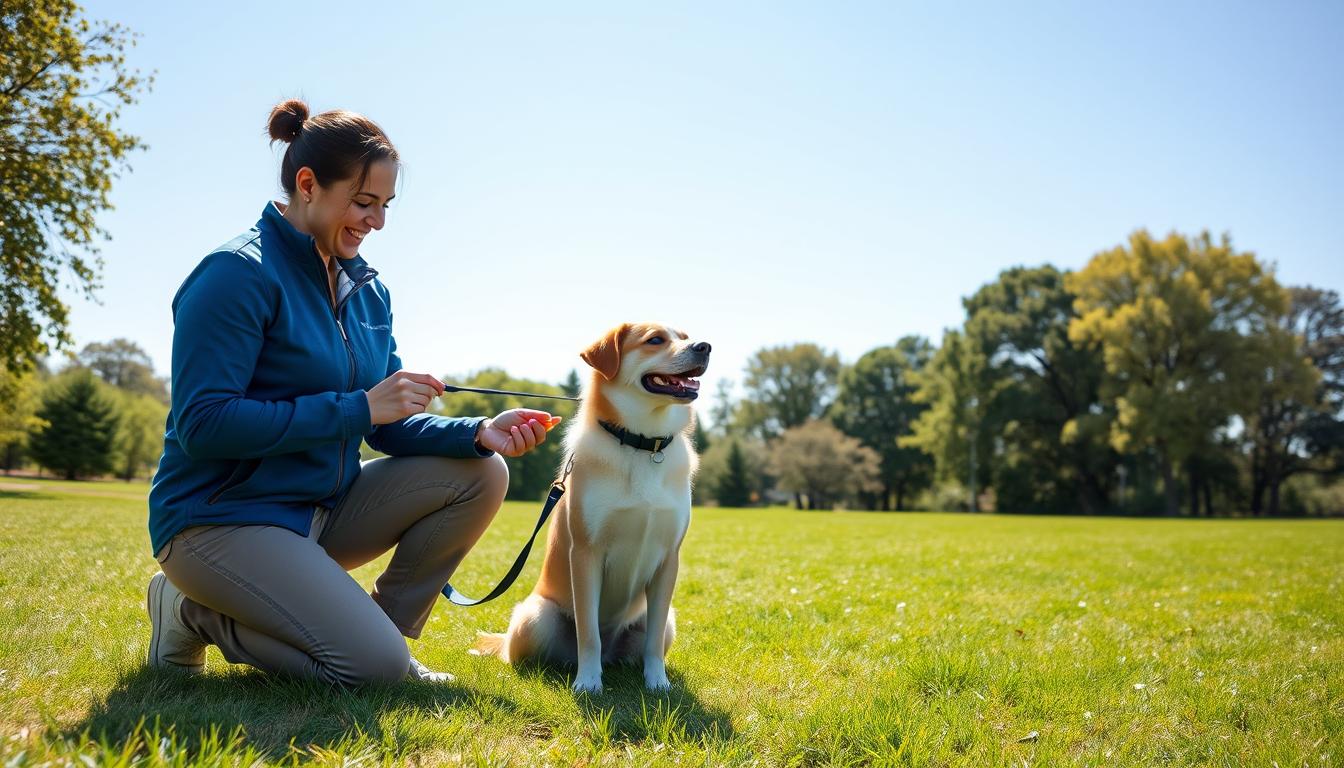
Dog training has evolved a lot, moving from simple commands to a complex science. It’s based on modern dog psychology. Understanding how dogs learn is key to training them well. This knowledge helps us create a strong bond between dogs and their owners.
It’s not just about teaching dogs to sit or stay. It’s about connecting with their natural behaviours. Evidence-based methods help us build a harmonious relationship with our pets. Let’s dive into the world of dog training through science.
Quick Recommendation: Our blog is filled with tips and tricks for training your dog. If you are looking for a comprehensive training program, we recommend K9 Training Institute.
Understanding Canine Behavior
Learning about canine body language is key for good dog training. Dogs show their feelings and plans through different signs. Knowing these signs helps owners tailor their training to what their dog needs.

Getting a dog to behave well often starts with understanding these non-verbal signals. For example, a wagging tail can mean happiness, excitement, or even anxiety. Paying close attention to a dog’s signals helps trainers fix bad behaviors before they start.
Imagine a dog growling or showing its teeth. Instead of scolding it right away, seeing this as a sign of fear or feeling scared is better. It shows the dog might need a safer training space.
By watching how dogs act, owners can build better relationships with them. This knowledge leads to better training results and happier dogs. Using these insights in everyday life makes dogs more responsive and well-behaved.
The Basics of Positive Reinforcement
Positive reinforcement is key in modern dog training. It’s based on operant conditioning. This method uses rewards to encourage good behavior.
When a dog does something good, it gets a treat or praise. This makes it more likely to do it again.

Operant conditioning shapes behavior through consequences. In dog training, positive reinforcement is the reward that motivates dogs. It helps them learn new things and stay good.
What motivates a dog can be different. It might be food, praise, or squeaky toys.
The more positive the reinforcement, the stronger the bond between dog and owner. This bond builds trust and cooperation. It makes training more fun and effective.
Using reward-based training also improves a dog’s well-being. When dogs know good behaviour leads to rewards, they’re more eager to learn. This leads to a happy and harmonious relationship with their owners.
Quick Recommendation: Our blog is filled with tips and tricks for training your dog. If you are looking for a comprehensive training program, we recommend K9 Training Institute.
Different Training Techniques
There are many ways to train your dog to behave well. Clicker training is one popular method. It uses a small device that makes a clicking sound when your dog does something right. This sound is followed by a treat, helping your dog learn that good actions are rewarded.
Clicker training is great because it clearly shows your dog what you want. This makes it easier for them to understand and follow commands.
Obedience training is another common method. It teaches dogs basic commands like sit, stay, and come. This training is key for teaching good manners and is often the first step in training.
Obedience training can be done in group classes or with a professional trainer. This makes it a flexible option for dog owners.
Behaviorist techniques focus on the psychological side of a dog’s behavior. They help with issues like anxiety, aggression, or too much barking. Trainers use these techniques to create plans that fit each dog’s needs, leading to lasting results.
The success of these training methods depends on the dog’s breed and personality. For example, high-energy dogs might enjoy clicker training because it keeps them active. On the other hand, more stubborn dogs might do better with the structure of obedience training.
Behaviorist techniques are especially helpful for dogs with specific problems. They offer a detailed approach that can really make a difference.
The Role of Genetics in Dog Training
Genetics play a big role in how dogs behave and learn. They influence a dog’s ability to follow commands. Studies show that genetics can affect a dog’s behavior and how well they can be trained.
For example, Border Collies are great at herding because of their genes. Labrador Retrievers are naturally good at retrieving, making them easy to train for tasks like fetch. Knowing these traits helps trainers tailor their methods for better results.
Many studies have shown how genetics shape a dog’s temperament. By understanding a dog’s genetic background, trainers can use more effective techniques. This approach makes training more efficient and strengthens the bond between dog and trainer.
Quick Recommendation: Our blog is filled with tips and tricks for training your dog. If you are looking for a comprehensive training program, we recommend K9 Training Institute.
Common Training Mistakes to Avoid
We’ve all been there—struggling to train our furry friends and occasionally falling into some common dog training pitfalls. One major error is the use of negative reinforcement. It might seem like a quick fix, but it can actually hinder progress and cause behavioral issues in the long run. Instead, focus on positive reinforcement to encourage desirable behaviors.
Another mistake to avoid is training inconsistency. Dogs thrive on routine, and mixed messages can be confusing and counterproductive. Ensure that every member of the household uses the same commands and rewards to keep your pup on the right track. Keeping a consistent training schedule helps reinforce positive habits and makes the learning process smoother for your dog.
Seasoned trainers often emphasize the importance of patience and understanding. Rushing the training process or expecting too much too soon can lead to frustration for both you and your dog. Remember, effective training takes time, dedication, and lots of positive reinforcement. By avoiding these common dog training pitfalls, you’ll be setting the stage for a well-behaved and happy companion.
The Science of Dog Training: Proven Methods
Exploring evidence-based dog training shows us that these methods are backed by lots of scientific studies. Experts have found several effective ways to improve dog behavior.
Cognitive-behavioral techniques are a top choice for dog training. They change how dogs think and act. This helps dogs and their owners get along better.
Studies have shown that these methods really work. For example, a University of Lincoln study found that dogs learned commands better and felt less anxious. This was thanks to using cognitive-behavioral techniques consistently.
These proven methods make training more effective for both dogs and their trainers. They help build trust and respect. For those looking for the best training, scientific research is the way to go.
The Importance of Timing and Consistency
Timing is crucial in dog training. When you reward your dog right after they do something good, it sticks in their mind. Cesar Millan, a famous dog trainer, says this immediate reward is vital for learning.
Consistent training is also key. It teaches your dog what’s expected of them. This leads to lasting changes in their behavior. Victoria Stilwell, a pet trainer, believes in regular training to help dogs learn faster.
Professional trainers stress the importance of both timely rewards and regular training. This combo is essential for long-term obedience and a well-behaved pet. Consistency and timely rewards lead to the best results in dog training.
Conclusion
Understanding dog behavior is key to effective training. We’ve learned about positive reinforcement and how it builds trust. This approach ensures our dogs respond well to us.
Exploring different training methods and genetics shows each dog is unique. This means we need to tailor our training to fit their needs. This way, we get the best results.
Staying away from common mistakes helps us build stronger bonds with our pets. Science-backed methods, along with timing and consistency, are crucial. They make training successful.
Being informed and proactive is at the heart of responsible dog ownership. It ensures our dogs get the support they need. This is how we guide them.
Embracing lifelong learning for dogs and humans alike is important. It helps us grow together. By doing this, we create strong, lasting bonds.
Putting in the time and effort to understand and apply these principles enriches our lives. It makes our relationships with pets more harmonious.
Quick Recommendation: Our blog is filled with tips and tricks for training your dog. If you are looking for a comprehensive training program, we recommend K9 Training Institute.