
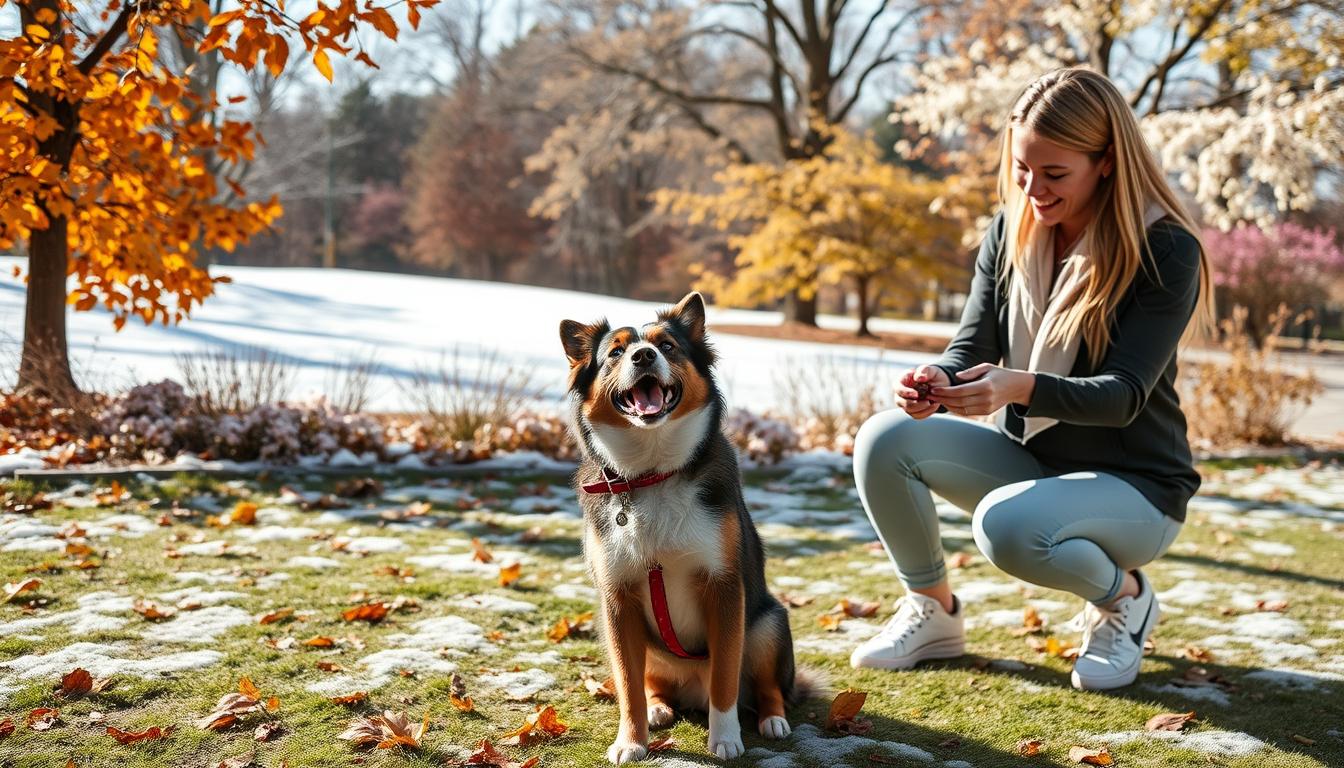
Ever thought about how the changing seasons affect your dog’s behavior and training? Learn how to adjust your dog training to match the weather and environment changes. This helps your furry friend stay well-behaved and happy all year.
Changing your training based on the season improves your dog’s behaviour and health. Are you ready to learn about seasonal dog training and keep a balanced schedule all year? Let’s explore how to keep your pup at their best, no matter the season.
Quick Recommendation: Our blog is filled with tips and tricks for training your dog. If you are looking for a comprehensive training program, we recommend K9 Training Institute.
Understanding Your Dog’s Seasonal Behavior
Dogs, like humans, change their behavior with the seasons. Knowing dog psychology helps you support them during these times. It’s important to see how different seasons affect their mood and energy.
In spring, dogs often have more energy with longer, warmer days. This is a good time for outdoor fun and training. But, in winter, they might seem tired and prefer staying indoors.
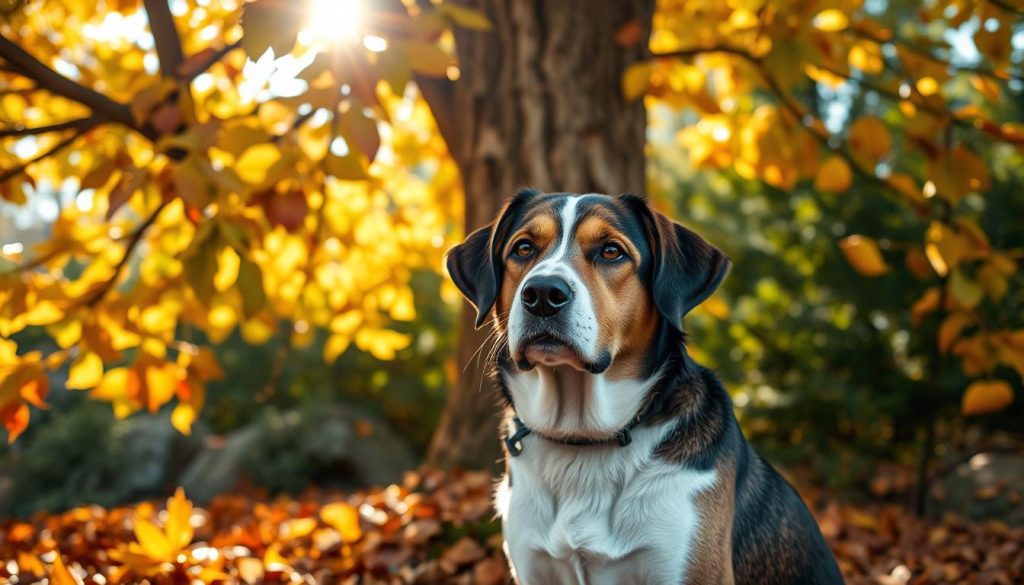
Behavior changes are mainly due to things like weather, daylight, and routines. Noticing these signs helps you adjust your dog’s daily life for each season.
By understanding these seasonal changes, you can make your dog’s life more stable and happy. This ensures they stay well-adjusted, no matter the season.
Spring Dog Training Essentials
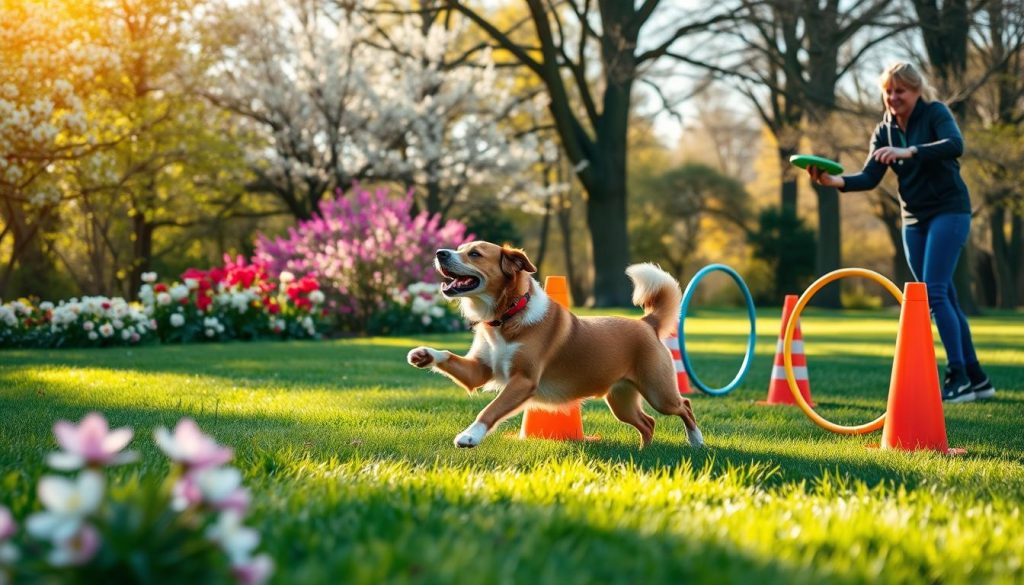
Spring is a great time to update your dog’s training and spend time outdoors. As the snow melts and it gets warmer, training can be more fun and effective. Outdoor activities keep your dog fit and mentally sharp.
Spring is when your dog’s energy is at its peak. This is a perfect time to practice basic commands or learn new ones. A consistent training schedule will improve obedience and strengthen your bond with your dog. Parks or your backyard are great places for training sessions.
But, spring also has its downsides, like allergies. It’s important to be aware of allergies when training outdoors. Watch out for pollen and other allergens that might harm your dog. If your dog shows signs of allergies, like scratching or sneezing, talk to your vet.
Keep your training area clean and avoid areas with lots of pollen. This will help keep your dog comfortable. By following these tips, you and your dog can have a great spring season.
Summer Safety and Training Tips
As temperatures rise, it’s key to add summer heat precautions to your dog’s training. The hot summer months can be hard on our pets. It’s important to use special strategies to keep them safe and interested.
First, never skip hydration. Make sure your dog always has fresh, clean water, especially during training. Carry a portable water bottle and a collapsible bowl on walks and outings. This keeps your pup hydrated everywhere you go.
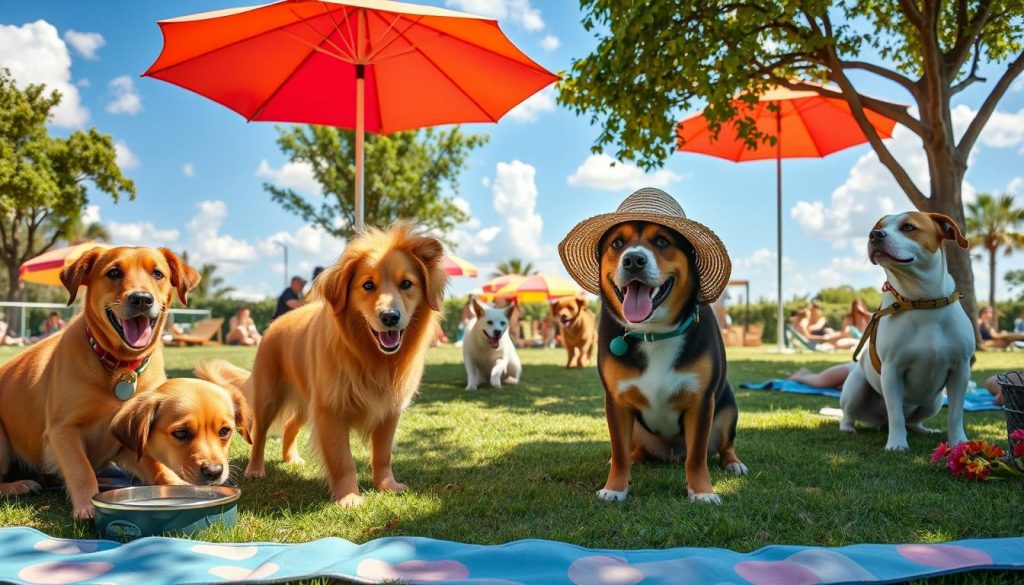
Adding cooling down exercises is also smart. Try water-based activities like playing with a sprinkler or using a kiddie pool. Games near water are fun and keep your dog cool.
Also, pick the right time for outdoor activities. Early morning and late evening are best to avoid the hottest part of the day. This helps prevent heatstroke and keeps your dog safe.
Remembering these tips will help your dog stay safe, hydrated, and cool in the summer. It makes their training fun and effective.
Fall Training Techniques to Implement
As the autumn breeze cools the air, it’s time to adjust your dog’s training schedule. This change is key as your family gets back into the school routine. Fall offers both challenges and chances to improve your dog’s training during this time.
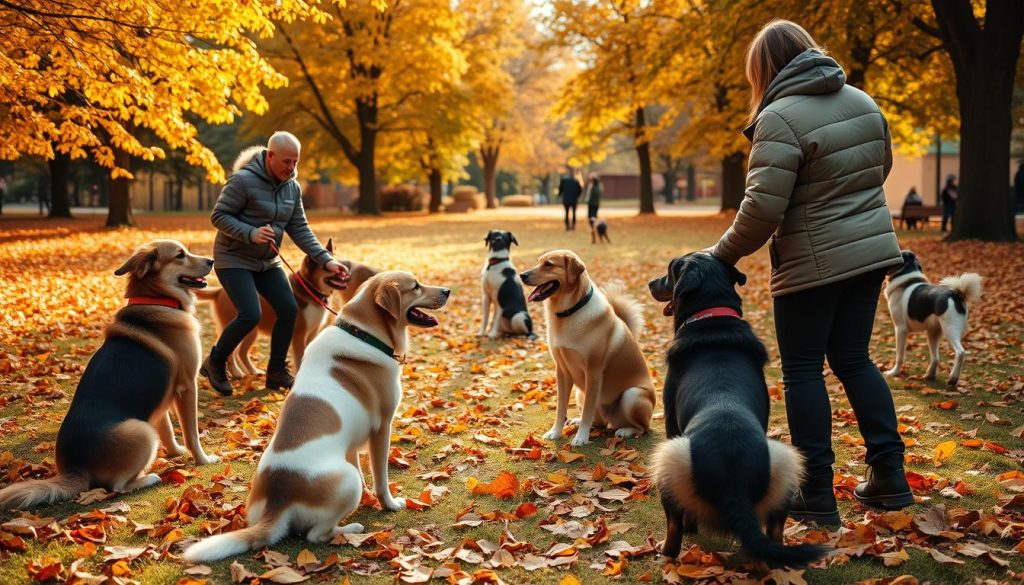
Your dog might feel anxious with the kids back in school. But, you can help with structured indoor exercises. These keep their mind busy when the family is away. Try puzzle toys or gadgets that make them think.
Even though it’s cooler, keep up with your dog’s training. Short, daily sessions are best. Practice commands like sit-stays and recalls indoors. This keeps them active without needing to go outside.
Use the cooler weather for fun walks and hikes. This adds exercise to your dog’s routine. Make sure to mix mental and physical activities to keep them happy and engaged.
With these tips, you can smoothly adjust to the back-to-school season. Tailor your training to fit the fall season. This way, your dog stays well-trained and happy all autumn.
Quick Recommendation: Our blog is filled with tips and tricks for training your dog. If you are looking for a comprehensive training program, we recommend K9 Training Institute.
Winter Dog Training Strategies
As winter arrives, it’s key to change your dog training for the cold months. Good cold weather training keeps your pet fit, healthy, and sharp.
Keeping a steady training schedule is vital. Even when it’s freezing, a regular routine keeps your dog focused and happy.
Indoor games and activities are great for winter. Try hide-and-seek, indoor agility, and new tricks to keep your dog’s mind busy.
Outdoor walks are still important in winter. Start with short, frequent walks to get your dog used to the cold. Also, consider a winter coat or booties to keep them warm.
With these tips, your pet will stay happy, healthy, and well-trained all winter.
10 Seasonal Dog Training Tips
Keeping your dog well-trained all year needs consistency and knowing the seasons. Here are ten key dog training tips for any season:
First, use positive reinforcement. Give treats, praise, or more playtime for good behavior. This makes your dog want to do the right thing.
Next, match your dog’s energy and needs with the season. In summer, train when it’s cooler. In winter, play indoors to keep them active.
Consistency is crucial. Stick to a regular training schedule. This helps your dog learn and remember commands, no matter the season.
Training should be short and often. Dogs focus better in short, frequent sessions. Be patient and keep training all year.
Teach commands that fit the season. For example, ‘leave it’ is useful in autumn. ‘Stay’ is key in winter for safety.
Watch how your dog acts with the seasons. They might be more energetic in spring or calmer in winter. Adjust your training to match.
Use different places for training. This helps your dog get used to new sights and sounds. Training in parks, at home, and on busy streets is good.
Don’t forget about socialization all year. Meeting new people, dogs, and places helps your dog feel secure and happy.
Choose the right training gear for each season. Use light harnesses in summer and waterproof gear in winter. This makes training fun for both you and your dog.
By following these tips, you can keep your dog’s training positive and effective all year.
Using Seasonal Changes to Reinforce Positive Behavior
Seasonal changes offer great chances to reinforce positive behavior in your dog. Spring is perfect for sparking curiosity and learning. Try outdoor activities that challenge your dog and make training fun.
Summer brings longer days for longer reward-based training sessions. Use water activities to keep your dog active. Give treats and praise for their efforts. Summer training feels like a game for both of you.
Fall is great for keeping your dog’s behavior positive. The cool air and changing views are exciting. Add leaves and pumpkins to your training to make it more fun.
Winter might seem like a time for staying inside, but it’s also good for training. Practice commands while cuddling to use the warmth as a reward. This makes training cozy and enjoyable.
Using each season’s unique features can make your dog’s training varied and fun. This approach not only keeps training exciting but also helps reinforce good behaviour all year.
Quick Recommendation: Our blog is filled with tips and tricks for training your dog. If you are looking for a comprehensive training program, we recommend K9 Training Institute.
Training Tools for Different Seasons
Keeping your furry friend happy and well-trained all year is key. The right *training accessories* are crucial. They make training better and keep your dog safe and comfy, no matter the season.
In summer, think about *appropriate dog gear* like cooling vests and paw wax. These items keep your dog cool and protect their paws from hot surfaces. It’s vital to use them to prevent heat problems and keep training safe.
When winter comes, choose *training accessories* for cold weather, like dog booties and insulated jackets. These keep your dog warm outside. The right *seasonal training devices* in winter stop frostbite and other cold issues, making training better.
Spring and fall are milder, but don’t skip *appropriate dog gear*. Raincoats and reflective vests are key. They keep your dog visible and dry during walks and training.
Using the right *training accessories* for each season keeps your dog comfy and ready to learn. Seasonal training devices are key to better training and your dog’s health.
Adapting Your Dog’s Routine to Seasonal Changes
As the seasons change, so should your dog’s routine. It’s key to keep them obedient and happy. You need to watch their needs and adjust their schedule to fit their lifestyle.
Keeping up with training can be tough with weather changes. But, it’s important to keep your dog active. For example, in summer, walk them early or late to avoid the heat. In winter, shorten outdoor walks but do more indoor exercises.
Also, think about how daylight changes affect your dog. Change their walk times or feeding schedules to keep them adjusted. Evening play can replace afternoon play as days get shorter. These small changes help your dog stay happy and well-behaved all year.
Being in tune with your dog’s needs and making seasonal changes can strengthen your bond. Making the right seasonal adjustments and keeping up with training can greatly improve your dog’s happiness.
Recognizing and Addressing Seasonal Anxiety
As the seasons change, you might notice changes in your dog’s behavior. Just like humans, dogs can feel anxious due to these changes. It’s important to recognize the signs of canine seasonal affective disorder to help your dog stay happy and healthy all year.
Signs of anxiety in dogs include excessive barking, pacing, changes in appetite, and withdrawal from activities. If you see these signs around seasonal changes, it might be canine seasonal affective disorder.
To help your dog, use stress reduction techniques in your routine. Regular exercise is key in managing anxiety. It helps release energy and promotes calmness. Try longer walks or active play that fits the season’s weather.
Keeping a consistent daily schedule can also help. Dogs love routine, so feed, walk, and play with them at the same times. Puzzle toys or training exercises can keep their minds busy and reduce stress.
If your dog’s anxiety doesn’t get better, see a vet. They can suggest more stress reduction techniques and possibly calming supplements or therapies. It’s crucial to tackle these issues quickly to keep your pet happy and well-adjusted all year.
Seasonal Fun: Interactive Games to Play Year-Round
Keeping your furry friend happy and engaged all year is key for their health. Engaging dog games can match each season’s needs. Whether it’s hot summer or cold winter, there are many ways to keep your dog entertained.
In spring and summer, try fetch, agility, and hide-and-seek. These games are great for exercise and training. A mini obstacle course in the backyard or park is a fun and active way to play.
When it’s cold outside, interactive dog puzzles are perfect for indoor fun. They challenge your dog’s mind and prevent boredom. Treat-dispensing toys or puzzle feeders keep your dog’s mind sharp and engaged, making indoor play exciting.
Adding engaging dog games to your routine keeps your pup happy and healthy all year. Mixing indoor and outdoor play enriches your pet, making them well-rounded and content.
Conclusion
Successful dog training is a year-round job. Each season brings its own set of challenges and chances to teach your dog new things. This keeps their behavior positive and strong.
Spring is a great time to start new training with its fresh air and warm weather. Summer is all about keeping your dog safe and cool, with short, fun training sessions. Fall is perfect for outdoor games and exercises that challenge your dog’s mind and body. Winter, though cold, is great for indoor training that keeps your dog’s mind sharp.
Training your dog all year keeps them well-behaved and responsive. It makes their life richer and strengthens your bond with them. Your hard work pays off in a well-mannered pet and a lifelong friendship.
Quick Recommendation: Our blog is filled with tips and tricks for training your dog. If you are looking for a comprehensive training program, we recommend K9 Training Institute.