

Ever wondered what’s going on in your dog’s mind? Maybe when they tilt their head, bark a lot, or wag their tail fast?
Exploring dog psychology can open a new world for you and your furry friend. It’s not just fun; it’s crucial for a strong bond and your pet’s happiness. Knowing your dog’s stress signs and behaviour patterns helps you respond better and build a harmonious relationship.
Quick Recommendation: Our blog is filled with tips and tricks for training your dog. If you are looking for a comprehensive training program, we recommend K9 Training Institute.
Introduction to Dog Behaviour
Understanding animal behaviour is key to your pet’s happiness. By studying dog actions, you can figure out what drives their behaviour. This knowledge strengthens your bond and helps in training them.
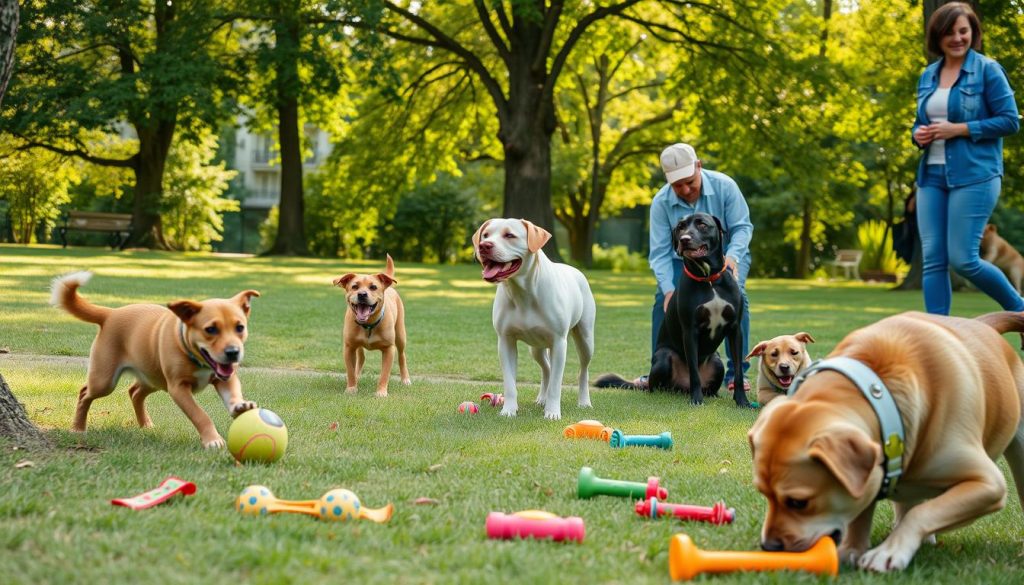
Behaviourist insights show dogs have both natural and learned behaviours. Natural behaviours come from their genes, while learned ones come from experience. Knowing this helps you tackle any behavioural issues.
The breed of a dog also plays a big role in their behaviour. Some breeds, like Border Collies, are naturally inclined to herd. Others, like retrievers, love to fetch. Knowing these traits helps you set the right environment for your dog.
Using behaviourist insights in your daily life with your dog can make a big difference. By understanding and responding to their actions, you can create a happy home for both of you.
Common Dog Behaviours Explained
Understanding dog behaviour can seem like trying to read a secret code. Every bark, chew, and wag of the tail has its own meaning. For example, barking can mean excitement, alertness, or even stress. Knowing why and how often they bark can tell you a lot.
Chewing is a common behaviour in dogs, but it’s often not understood. Puppies chew because of teething, but adult dogs chew for different reasons. It could be boredom, anxiety, or frustration. Giving them the right chew toys can help.
Digging is a natural behaviour for dogs, coming from their ancestors who dug for cool spots or to hide food. But if your dog is digging up your yard, it might need more exercise or mental play. Meeting these needs can stop the digging.
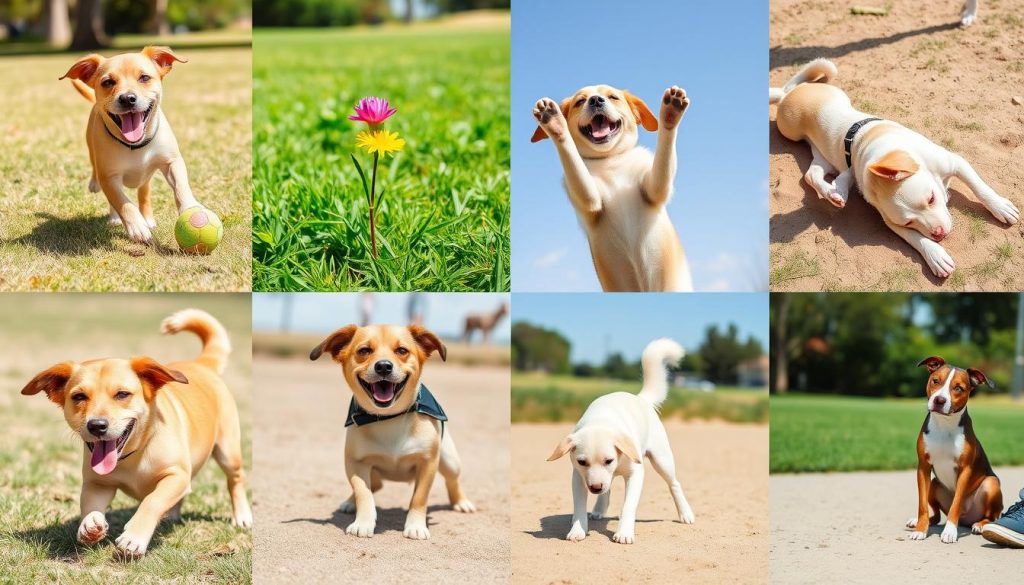
Tail wagging is often misunderstood. A wagging tail usually means happiness, but the speed and direction tell more. A slow, side-to-side wag means a friendly dog. But a fast, stiff wag might mean they’re alert or even aggressive.
Knowing how to read dog behaviour is key to a good relationship with your pet. Being aware of these behaviours helps in daily life and spotting when your dog is upset or uncomfortable. It’s important to know the difference between normal and abnormal behaviour to keep your dog happy and you at ease.
Decoding Dog Body Language
Dogs communicate more than just by wagging their tails. They show a wide range of emotions and intentions through their body language. It’s key to recognize these signs to build a strong bond and keep your dog happy and healthy.
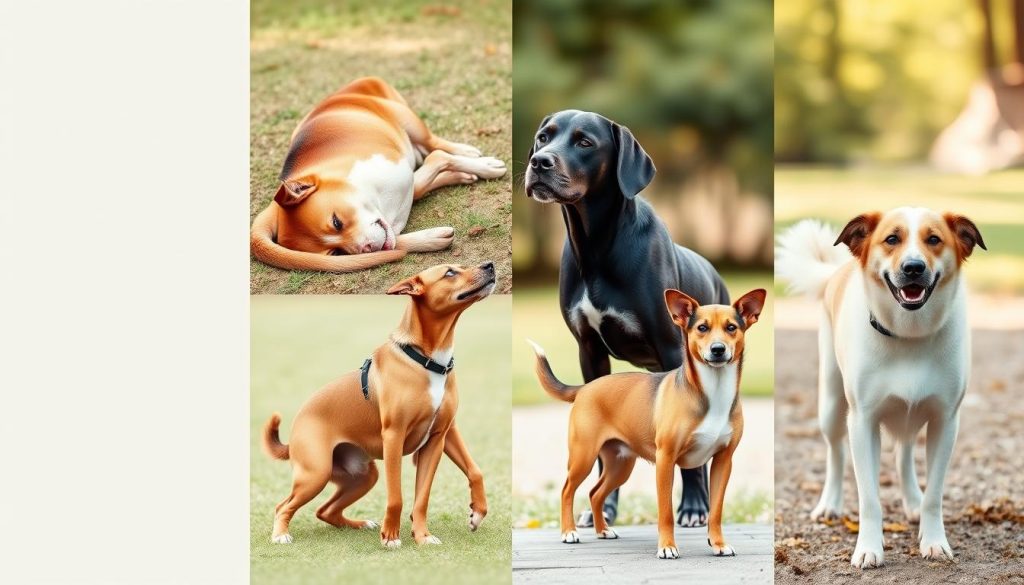
Dogs use their posture to communicate. A relaxed dog has loose legs and a wagging tail, showing they’re comfortable and happy. But, a tense dog with stiff legs and a rigid body might be anxious or scared.
The position of a dog’s ears, eyes, and mouth also tells a story. Erect ears and a focused stare mean they’re alert or curious. An open mouth shows they’re relaxed. But, closed mouths, avoiding eye contact, and ears pinned back can mean they’re stressed.
Signs like a raised hackle, where the fur on their back stands up, show excitement or apprehension. It’s important to notice these signs, especially when introducing dogs to new places or meeting new dogs. The way a dog wags their tail also tells you how they’re feeling. A fast, high wag shows excitement, while a slow, low wag might mean they’re unsure.
Understanding dog body language is all about context. Always consider the environment and situation when reading your dog’s signals. This way, you’ll know how to respond best.
As you learn more about your dog’s body language, you’ll find it fascinating. Taking the time to understand these signals will strengthen your bond and improve your dog’s happiness.
The Importance of Socialization
Puppy socialization is key to your dog’s growth. In the early years, introducing them to different places, people, and animals is vital. It helps them become confident and well-adjusted adults.
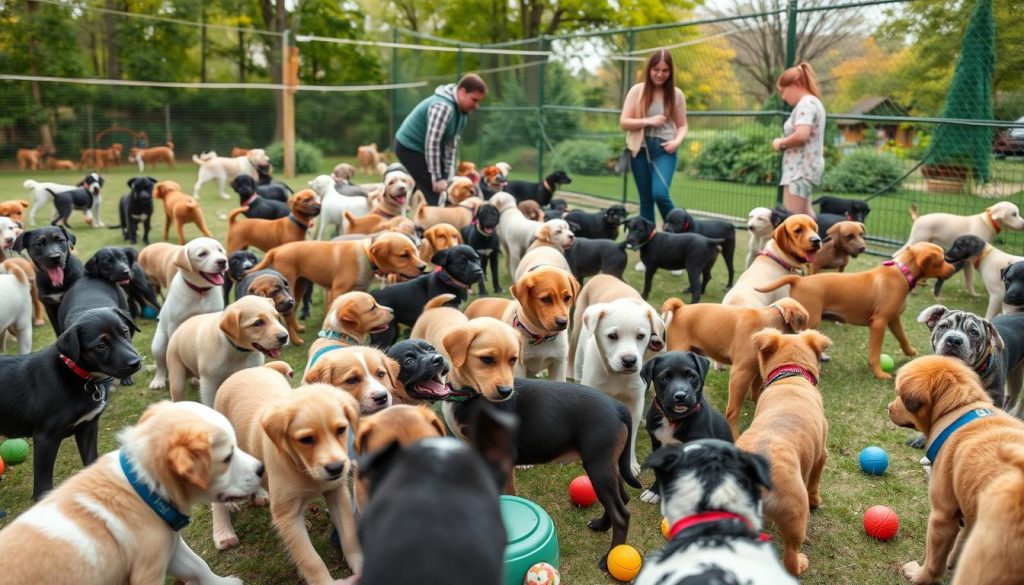
Good socialization prevents bad behaviours caused by fear or anxiety. By exposing your puppy to new things early, they learn to handle new situations better. This is crucial for their mental health.
Without proper socialization, dogs might become aggressive or fearful. This can make everyday life tough. It’s important to socialize them carefully, starting with calm, well-behaved dogs. This builds their confidence and social skills.
Always aim for positive experiences. Don’t overwhelm your puppy with too many new things at once. Gradual, safe exposure helps them learn to interact well with others. This leads to a happier, more balanced dog.
Training Techniques to Manage Behaviour
Managing your dog’s behaviour is crucial. The right training techniques are key. By focusing on behavioural training, your dog learns what’s expected at home. Positive reinforcement helps your dog understand right from wrong and strengthens your bond.
Basic obedience training is a great start. Teaching commands like “sit,” “stay,” and “come” improves communication and control. These commands help solve behavioural problems. Remember, consistency is vital in obedience training.
Positive reinforcement, like treats and praise, is essential. It makes training fun and encourages good behaviour. Training that’s positive and rewarding is more effective than negative methods.
Time and effort in training can greatly improve your dog’s behaviour. Every dog is different, so be patient and persistent. Using positive reinforcement and consistent training will make a big difference.
Quick Recommendation: Our blog is filled with tips and tricks for training your dog. If you are looking for a comprehensive training program, we recommend K9 Training Institute.
Understanding Aggressive Behaviour in Dogs
Aggressive behaviour in dogs can be scary and hard to handle. It’s important to know why dogs act aggressively. There are different reasons, like fear, defending territory, or guarding things.
Many things can cause a dog to be aggressive, like their genes, not being socialized, or bad experiences. Knowing what makes your dog aggressive is the first step. Some dogs get angry with strangers, while others fight over food or toys.
To manage your dog’s aggression, you need to use special techniques. Training that helps them get used to things and positive rewards can help. These methods can change how your dog reacts.
If your dog’s aggression is really bad, you should get help from experts. Trained dog trainers or vet behaviourists can create a plan just for your dog. Their help can make a big difference for your dog and your family.
Understanding what makes your dog aggressive and acting on it can really help. Being patient, consistent, and getting professional advice are important. With these steps, you can help your dog overcome aggression.
Quick Recommendation: Our blog is filled with tips and tricks for training your dog. If you are looking for a comprehensive training program, we recommend K9 Training Institute.
Separation Anxiety in Dogs
Dealing with canine separation anxiety is tough for both you and your dog. It’s key to spot the anxiety symptoms like barking, destructive acts, and trying to get out. These signs show your dog is upset and needs help fast.
The reasons for canine separation anxiety can differ. They might come from changes in your family’s life, not enough social time, or genetics. Knowing why helps you tackle their anxiety better.
Using anxiety relief strategies is vital for your dog’s happiness. Methods like desensitization and counterconditioning are effective. Desensitization means starting with short times alone and gradually increasing it. Counterconditioning links good times with your absence, making it positive.
Adding these strategies to your daily life needs time and effort. But, the good it does for your dog’s mind is worth it. By reducing anxiety symptoms and using good anxiety relief strategies, your dog will feel safe and joyful, even when you’re not there.
Working on canine separation anxiety boosts your dog’s life and your bond. You can beat this challenge and create a better home life together.
The Role of Exercise and Mental Stimulation
It’s important to make sure your dog gets enough exercise and mental challenges. Regular exercise keeps their body in shape. It also stops boredom and bad behaviours.
For active dogs, it’s key to mix up their activities. Walks, runs, and playtime help them use up energy. This is especially true for dogs that have lots of energy. Plus, it strengthens your bond with them.
Mental games are also vital. Toys and puzzles that challenge their brain are great. Simple games like hide-and-seek or interactive toys that give treats when solved are perfect.
By combining physical and mental activities, your dog will have a happy life. Taking care of both their body and mind is essential for a well-adjusted pet.
Nutrition and Its Impact on Behaviour
Feeding your dog the right diet is key to their happiness and behaviour. A balanced diet keeps them physically healthy and influences their behaviour. Many factors affect how nutrition impacts your dog’s behaviour.
Dogs, like people, can have big mood swings based on their food. Proteins, carbs, fats, vitamins, and minerals are crucial for a balanced diet. If your dog seems too aggressive or tired, it might be due to bad nutrition or food allergies.
It’s important to understand how food affects your dog’s behaviour. Some foods can make them too active or even aggressive. Always check what you feed your dog and talk to a vet to make sure they eat well.
Choosing high-quality proteins and avoiding fake additives can help your dog behave better. Making your dog’s diet fit their needs can stop bad behaviour and make them happier.
How to Create a Safe and Stimulating Environment
Making your home dog-friendly is key for your pet’s happiness. Add environmental enrichment to keep your space safe and fun. Use toys that challenge your dog’s mind and prevent boredom. Kong toys, puzzle feeders, and interactive games are great picks.
Make sure your home is safe for dogs. Keep harmful items away, secure trash, and use safety gates. A good crate can be a cosy spot for your dog, reducing stress.
Change up your dog’s toys to keep them exciting. Hide treats to encourage foraging. Also, set up cosy play areas with comfy bedding and favourite toys.
Check your yard or outdoor space regularly for dangers. Remove sharp objects and make sure fences are secure. A safe and engaging space makes your home a wonderful place for your dog.
Conclusion
Understanding dog behaviour is key to a strong bond with your furry friend. We explored many aspects of canine behaviour in this article. This includes reading body language, managing aggression, and dealing with separation anxiety. By mastering these, you’re on the path to a balanced environment that supports your dog’s health.
Being a responsible dog owner is essential. Socialization, consistent training, and providing physical and mental stimulation are crucial. A good diet and a safe, stimulating environment also play a big role in your dog’s happiness and well-being.
Staying informed and caring for your pet with empathy is vital. Learning about your dog’s needs and behaviours helps you address any issues early. A well-understood dog is happier and better behaved, making your time together rewarding.
Quick Recommendation: Our blog is filled with tips and tricks for training your dog. If you are looking for a comprehensive training program, we recommend K9 Training Institute.