
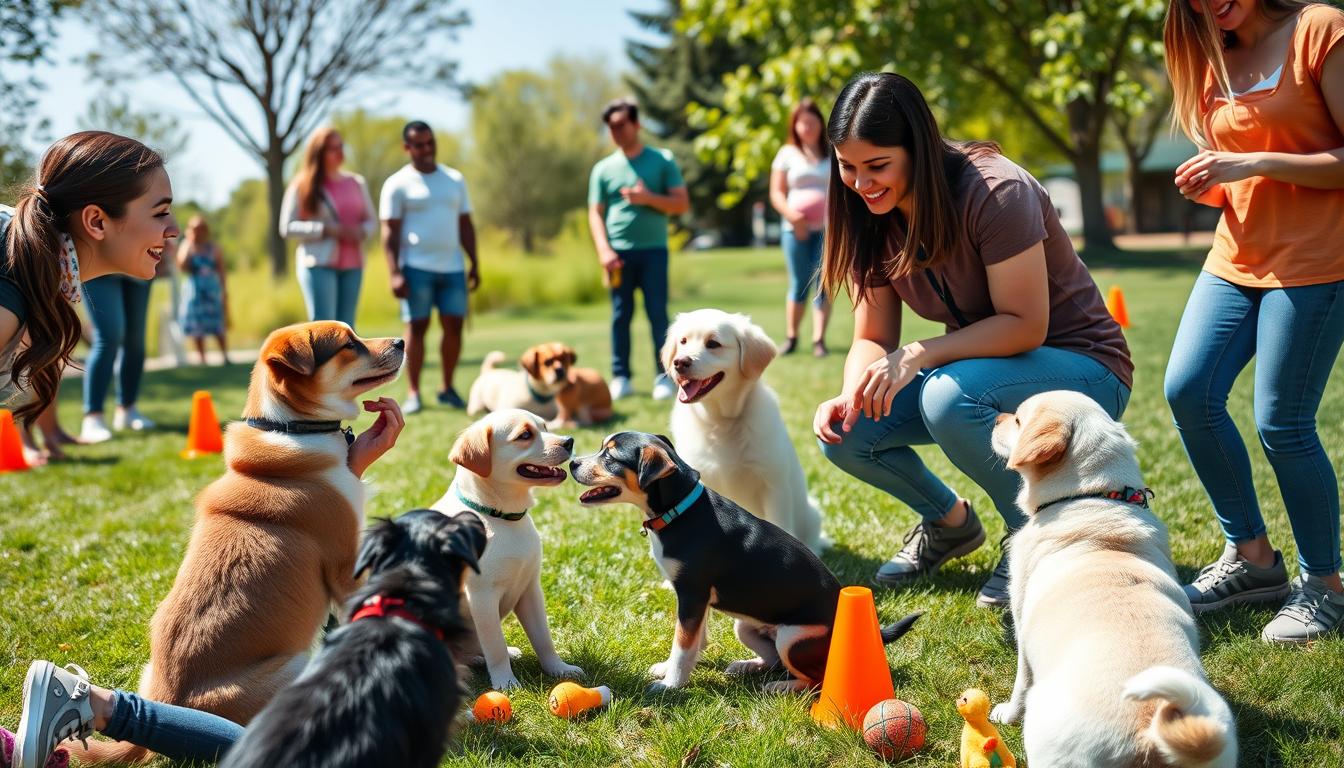
Ever wondered why some dogs are so well-behaved while others cause trouble? As a new dog owner, learning the dog training basics is key. This guide will share the best puppy training tips for beginners. It will help you start your pet on the right path.
The American Kennel Club says starting training early is important. It makes your puppy friendly and obedient. With the right methods, training can be fun and effective. This way, your puppy will become a loving family member.
Are you ready to learn about beginner dog training? Let’s look at the top ten effective dog training tips for new owners!
Quick Recommendation: Our blog is filled with tips and tricks for training your dog. If you are looking for a comprehensive training program, we recommend K9 Training Institute.
Understanding Your Dog’s Behavior
Dogs communicate with us in their own special way. It’s key to read these signals for a happy, harmonious bond. They use tail wagging, barking, and body language to talk to us. By understanding these signals, you can know what your dog needs and feels.
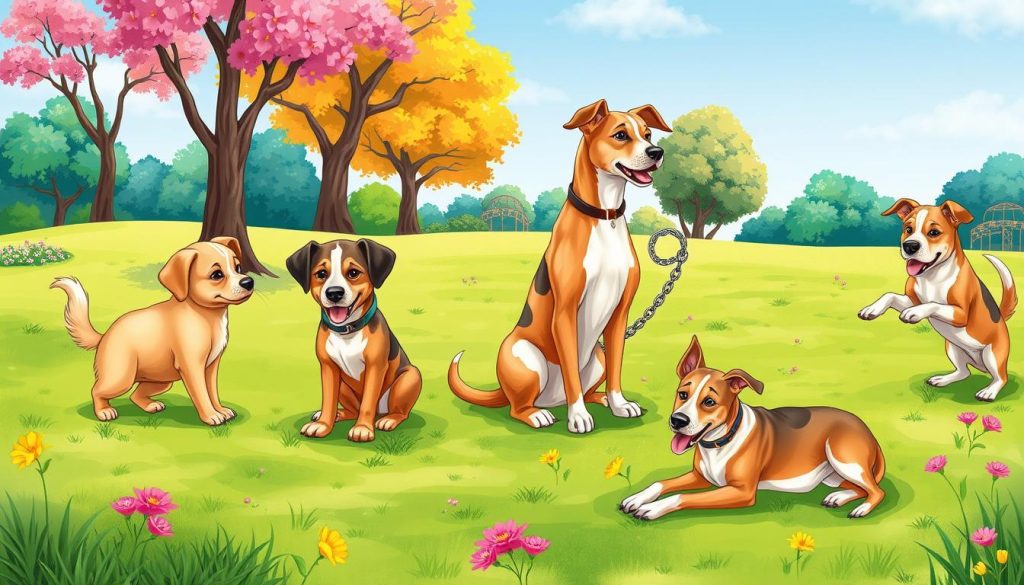
Dogs speak with their bodies. A wagging tail can mean happiness, but it can also show fear or anger. It’s important to watch how the tail moves and its position. For example, a raised hackles can mean a dog feels threatened or unsure.
Vocalizations are also important in dog communication. Barking can mean excitement, alertness, or discomfort. Listen to the bark’s pitch, length, and how often it happens. Experts like the Humane Society say it’s crucial to understand these sounds.
Knowing about dog behavior helps you meet your pet’s needs. It’s about spotting stress signs or understanding play. Learning to read dog signals strengthens your bond and makes your relationship better.
Basic Commands Every Dog Should Know
Teaching your puppy basic obedience is a joy for both of you. Learning commands like “sit” and “stay” is key to a well-behaved dog.
Start with teaching your puppy to sit and stay. To teach “sit,” hold a treat near their nose. Move it up towards their head. When their back touches the ground, give them the treat right away. Do this often to get the best results. It’s a basic command for puppy training.
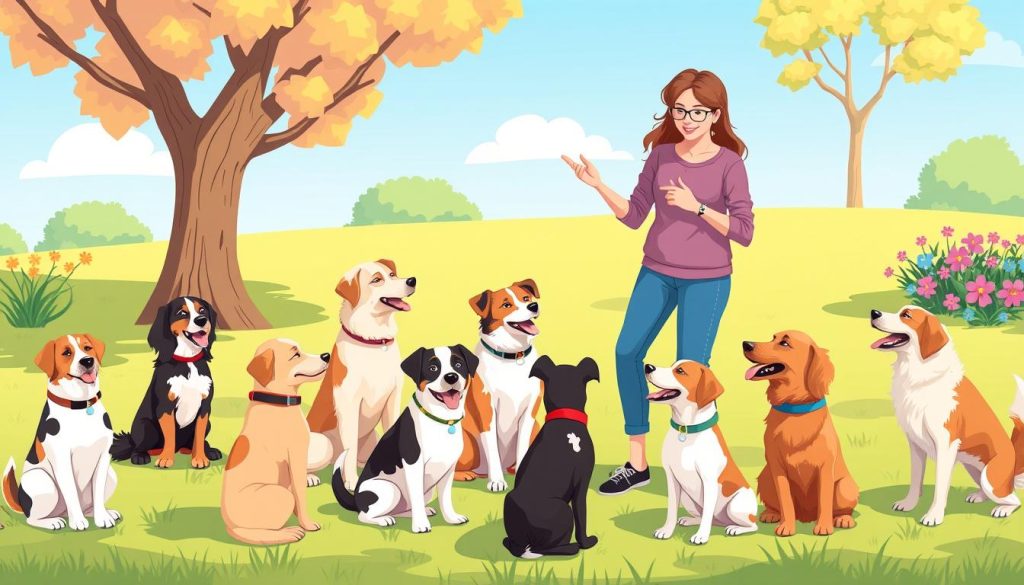
Then, teach the “stay” command. Have your dog sit, then hold your hand out in front of their nose and say “stay.” Take a few steps back and give them a treat if they stay. With time, you’ll see big improvements in their training.
Commands like “come” and “heel” are also important. They help your dog listen to you, both at home and outside. Always use positive methods to teach them, as experts recommend. This builds trust and obedience.
House Training Your New Dog
Housebreaking your dog is key to a happy and clean home. To help with potty training puppies, a consistent routine is vital. The American Society for the Prevention of Cruelty to Animals (ASPCA) recommends a regular schedule for meals, play, and bathroom breaks. This helps puppies learn when and where to go potty.
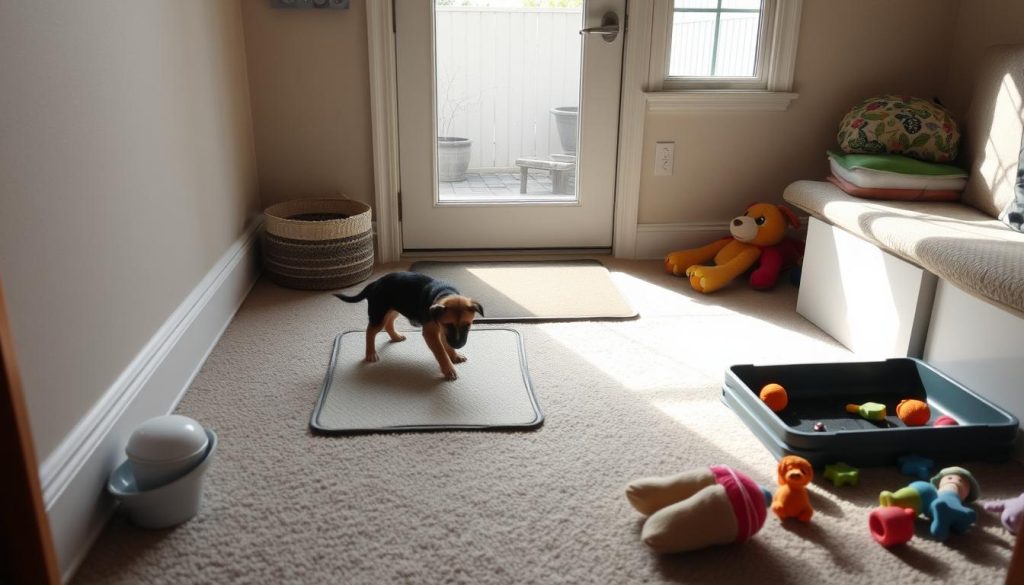
Using a crate can be very helpful. It manages your dog’s space and lowers the chance of accidents. Dogs don’t like to soil their sleeping areas, which helps with house training. A crate becomes a safe, cozy spot for your pet.
Positive reinforcement is important in housebreaking your dog. Give treats and praise when they go potty in the right spot. Being consistent helps them learn faster and builds trust. Remember, patience and persistence are essential in potty training puppies.
Consistency and Patience in Training
Training your dog needs a mix of consistency and patience. It’s key to have regular dog training routines. This helps your pup know what’s expected of them.
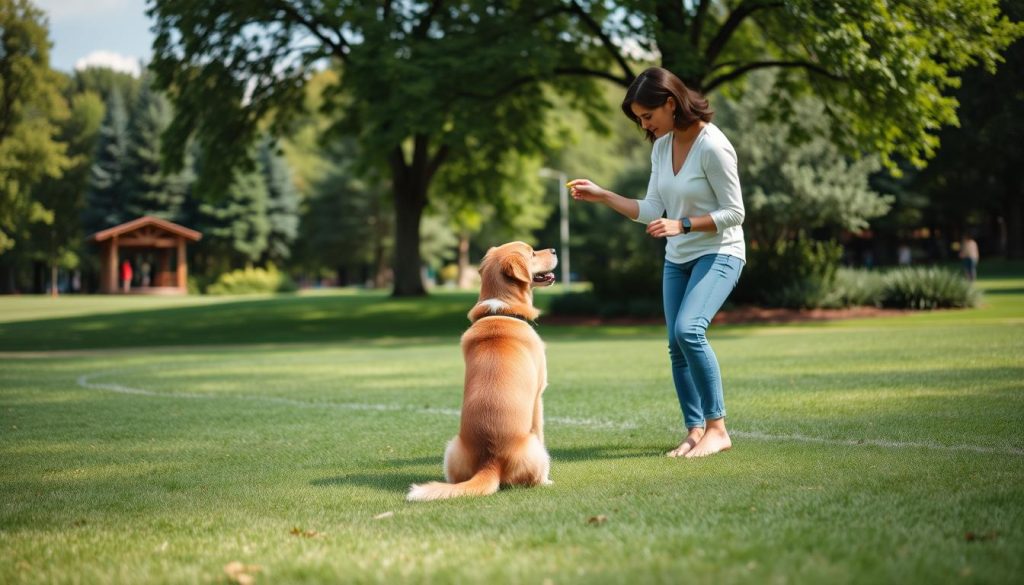
Patience is vital in puppy training. Young dogs have short attention spans and may not get new things right away. A structured training schedule helps create a predictable environment. This environment fosters better learning and adaptability in your furry friend.
Experts in dog training stress the importance of repetition. A good training schedule ensures consistent practice of commands. This makes it easier for your dog to remember and respond correctly. Remember, progress might be slow, but with consistent effort and a positive attitude, you’ll see big improvements over time.
Quick Recommendation: Our blog is filled with tips and tricks for training your dog. If you are looking for a comprehensive training program, we recommend K9 Training Institute.
Leash Training Fundamentals
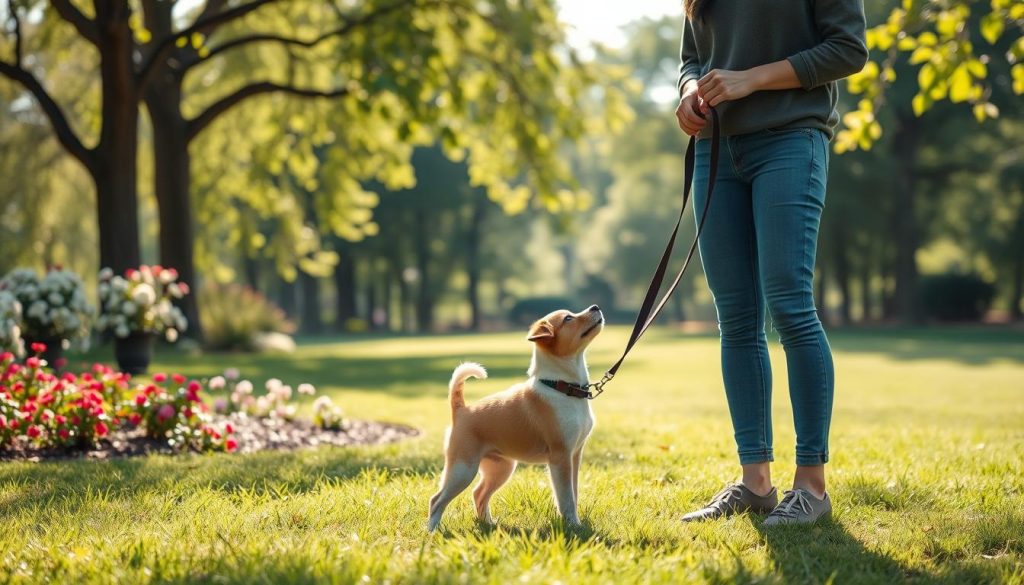
A well-mannered dog on a leash is a joy for any dog lover. Teaching dog leash manners is key for pleasant walks and positive public interactions. Loose leash walking means your dog walks by your side without pulling. This makes walks more enjoyable and shows you’re the leader.
Preventing leash pulling is also vital. Pulling can be frustrating for both you and your dog. It can even lead to unsafe situations. Using positive reinforcement in training can help stop this behavior. For example, give treats or praise when your dog walks without pulling.
The American Kennel Club says patience is crucial in leash training. Start with short sessions and gradually increase the time. Keeping training fun also helps a lot.
Remember, patience and consistency are your best allies. Happy training!
Training Your Dog to Socialize
Socializing your puppy is key as a new dog owner. It ensures your pet grows into a friendly adult. Start slow and make new experiences positive. This means exposing your pup to different people, animals, and places in a fun way.
Effective dog socialization techniques include gradual exposure and rewarding good behavior. Begin by introducing your puppy to various sights, sounds, and smells. Short, frequent sessions are better than overwhelming them.
Veterinary associations stress the importance of safe socialization. Always watch your puppy’s body language to see if they’re okay. Meeting new people and dogs helps your puppy become more confident and less fearful. Socializing your puppy right can prevent future problems and keep them happy.
Using proven dog socialization techniques and introducing your dog to new things patiently is crucial. It builds a foundation for a sociable and well-mannered pet. Socialization is a lifelong process, important for your dog’s adaptability.
Quick Recommendation: Our blog is filled with tips and tricks for training your dog. If you are looking for a comprehensive training program, we recommend K9 Training Institute.
Crate Training Basics
Learning about crate training can change your life as a new dog owner. It gives your dog a safe space to call their own. Many experts say crate training helps with house training.
Make the crate a good place for your dog. Start by letting them get used to it with treats and toys. Never punish them in the crate. You want your dog to feel safe and happy there.
Also, crate training helps with your dog’s behavior. It makes them less stressed during trips or vet visits. Be consistent and patient. These tips will make the crate a cozy spot for your dog.
Teaching Your Dog to Stay Calm
Teaching your dog to stay calm can be tough, especially for new owners. Using calming techniques for dogs can greatly help. Regular exercise is essential. It helps burn off energy that can lead to hyperactivity and anxiety. A tired dog is usually calmer.
Mental stimulation is also important. Activities like puzzle toys or obedience training sessions are great. They give your dog’s mind a workout, reducing stress and making them more relaxed.
Creating a safe space for your dog is another good idea. Crate training can serve as this safe spot. Also, using methods recommended by experts, like the Pet Professional Guild, can help. Techniques like gentle petting, calming sprays, or soothing music can be very effective.
Every dog is unique. What works for one might not work for another. Being patient and persistent is key. By using these strategies, you’re helping your dog become calm, happy, and well-adjusted.
Conclusion
As you start your dog training journey, remember to keep up the good work. You’ve learned how to understand your dog’s behavior and teach them basic commands. You’ve also mastered house training and leash training.
Consistency and patience are key. These steps help build a well-behaved dog. You’ve also learned about socialization, which is important for your dog’s happiness.
Crate training and teaching your dog to stay calm are crucial. They help your dog feel safe and secure. By doing this, you’re not just training them but also building a strong bond.
Remember, dog training is a lifelong journey. It’s not just about teaching commands. It’s about making sure your dog always behaves well.
Stay patient and consistent as you continue training. Always be ready to learn with your dog. Here’s to a fulfilling and rewarding relationship with your loyal companion!
Quick Recommendation: Our blog is filled with tips and tricks for training your dog. If you are looking for a comprehensive training program, we recommend K9 Training Institute.