

Ever wondered why your dog barks about so many things? It’s key to understand why they bark. Barking is more than noise; it’s a way for dogs to express their feelings and thoughts.
By learning about barking, you can strengthen your bond with your dog. The American Kennel Club says many things affect why dogs bark. This includes their breed, where they live, and their personality.
Knowing these factors helps you meet your dog’s needs better. It also makes your interaction with them healthier. So, let’s dive into the world of barking and discover why dogs bark.
Quick Recommendation: Our blog is filled with tips and tricks for training your dog. If you are looking for a comprehensive training program, we recommend Spiritdogtraining.
Understanding the Reasons Behind Dog Barking
Dogs use barking to talk to us and express their feelings. They bark for many reasons, like warning us of danger or showing excitement. It’s like they’re using words to tell us something.
Knowing why your dog barks can help you understand them better. For example, a dog barking at the door might be saying, “Hey, someone’s here!” On the other hand, a dog that barks a lot when alone might be feeling bored or scared. Watching how your dog acts and what they’re doing when they bark is key. It helps you know if their barking is normal or if they need help.
Why Dogs Bark: Insights and Solutions
Understanding why your dog barks is crucial for solving the problem. Every dog is different, so finding a consistent way to manage their behavior is key. Experts say positive reinforcement is the best approach.
By rewarding your dog for being quiet, you can cut down on barking. Also, short training sessions can keep them engaged and focused.

Introducing your dog to different sounds and situations can help too. This helps them get used to new places and reduces anxiety. By understanding these insights, you can create a better environment for both you and your dog.
Quick Recommendation: Our blog is filled with tips and tricks for training your dog. If you are looking for a comprehensive training program, we recommend Spiritdogtraining.
Different Types of Barks and Their Meanings
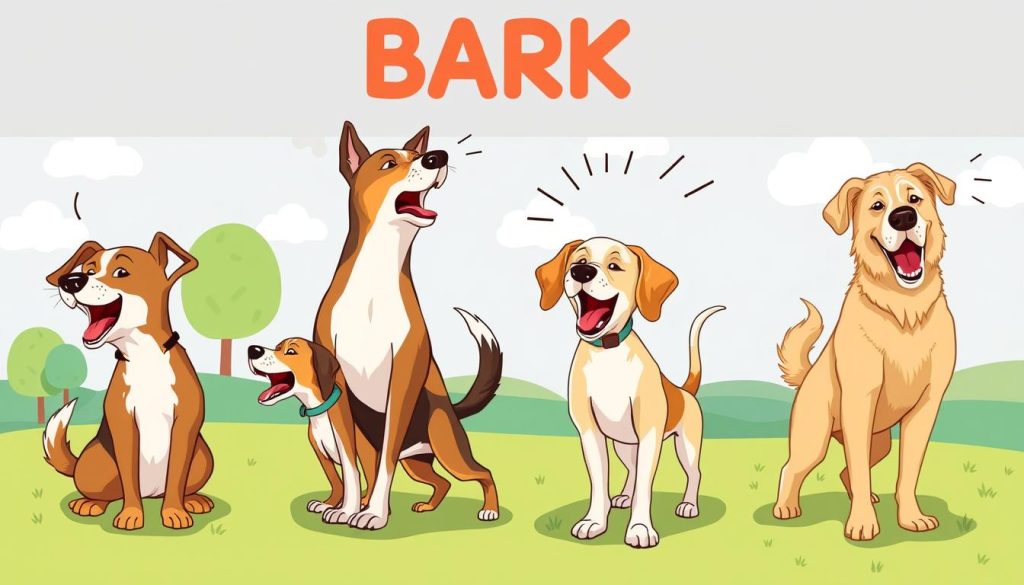
Understanding your dog’s barks can give you a peek into their feelings and needs. The pitch, length, and frequency of a bark can tell you a lot. For instance, a high-pitched bark usually means excitement or joy. On the other hand, a deep, continuous bark might be a warning or alert.
This variety in barks makes for a rich way of communication between dogs and their owners. By paying close attention to these differences, you can strengthen your bond with your dog. If your dog barks in a certain way, try to figure out what they’re trying to say. Is it a quick, yappy bark that suggests they want to play, or a sharp, drawn-out bark that shows they’re worried?
Training Techniques to Manage Excessive Barking
Dealing with too much barking can be tough, but there are ways to help. Rewarding your dog for being quiet is a good start. Give them treats or praise when they stay calm in situations that usually make them bark. This shows them being quiet is good.
Teaching commands like “quiet” can also work well. Say “quiet” firmly when your dog starts barking. If they stop, give them a treat right away. This teaches them the command means to be quiet.

Another good idea is to help your dog get used to things that make them bark. Start by exposing them to these things slowly, and reward them for staying calm. Using a clicker can make training easier, as it gives a clear signal for good behavior. Keeping your training routine consistent is key, as dogs love routine.
Being patient is important in this journey. Regular training not only reduces barking but also strengthens your bond with your dog. Every training session can be a positive experience for both of you.
When to Seek Professional Help
If your dog’s barking is a constant problem without a clear cause, it’s time to seek help. Dogs bark for many reasons, but persistent barking can mean they’re stressed or anxious. A barking consultation with a dog behaviorist can offer great insights.
They can look at your dog’s behavior and suggest ways to stop the barking. This can help manage your dog’s barking effectively.
Training at home might not solve the problem. If your dog’s barking doesn’t change, a dog behaviorist can help. They know how to tell if your dog is scared, excited, or protecting its territory.
With their help, you can create a plan to reduce unwanted barking. This plan will make sure your dog feels safe and secure.

Conclusion
Understanding why dogs bark is key to better communication with them. By knowing the reasons behind their barking, like anxiety or excitement, you can connect with your dog better. This helps you understand their needs and feelings.
Effective training is crucial for managing dog behavior. With dedication and consistency, you can teach your dog to bark less. This also encourages good behavior. If problems persist, getting professional help is important to solve them fast.
Every dog is unique, and being patient and understanding is important. By using the tips from this article, you can create a peaceful home. This way, you can enjoy a happy and quiet life with your dog.
Quick Recommendation: Our blog is filled with tips and tricks for training your dog. If you are looking for a comprehensive training program, we recommend Spiritdogtraining.